
How to Authenticate a Luxury Bag: The Complete 2026 Guide
By Camille Laurent, Authentication Expert — Old Fashioned Club
The general method for authenticating a pre-owned luxury bag: stitching, leather, hardware, serial/date code, card, and the role of Entrupy. Expert guide by Old Fashioned Club Paris.
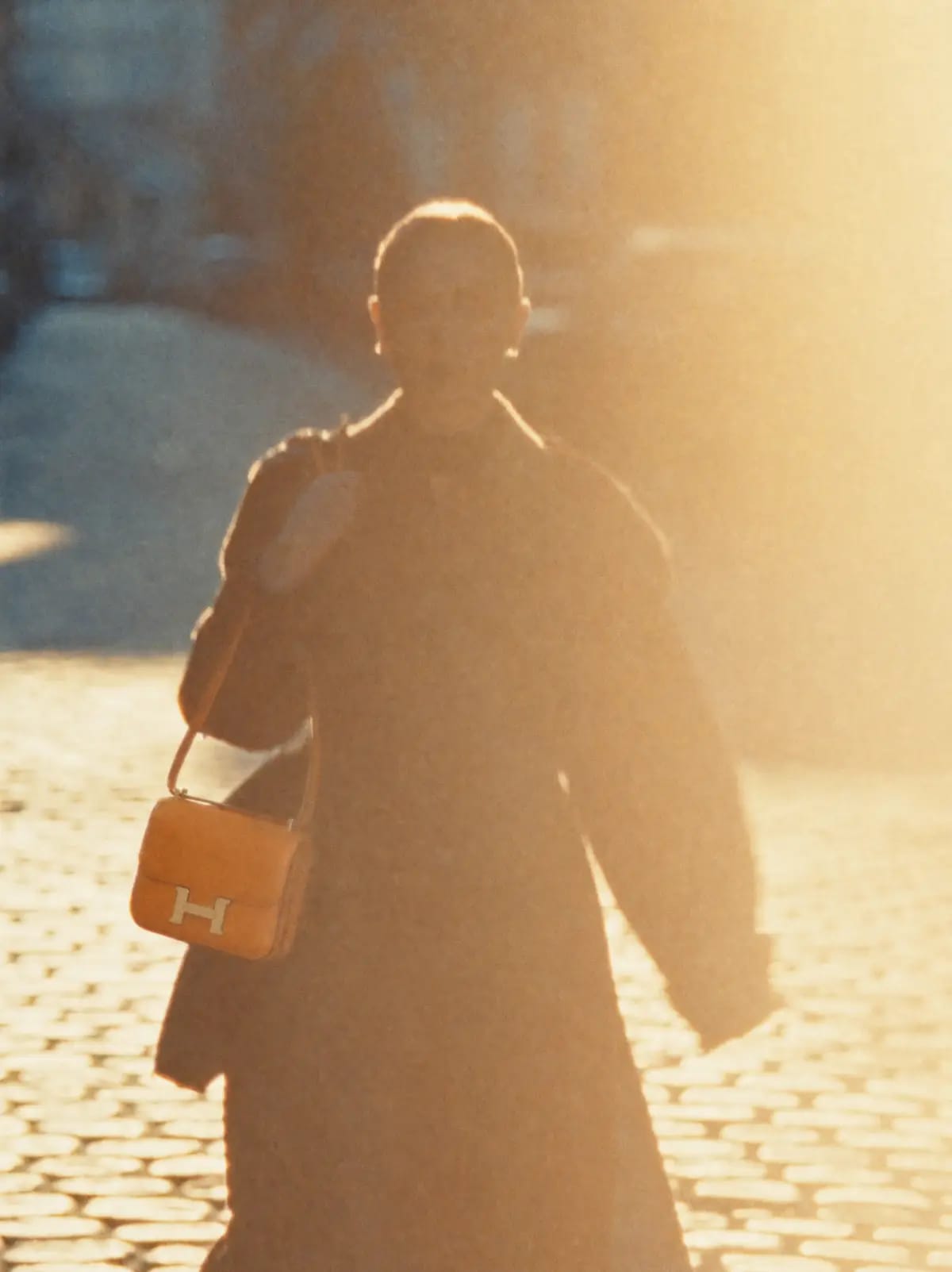
To authenticate a luxury bag, examine seven families of clues in this order: the quality and regularity of the stitching, the nature of the leather and its smell, the weight and finish of the hardware, the production code or date, the consistency of the lining and stampings, the authenticity of the card and accessories, and finally the overall coherence. No single criterion is enough on its own: it is their convergence that proves authenticity. When in doubt, call on a professional or an Entrupy assessment (AI + microscopy, with a certificate).
Why a general method before house-specific details
Every major house — Chanel, Hermès, Louis Vuitton, Dior — has its own codes: hologram and serial number at Chanel, blind stamp at Hermès, date code at Louis Vuitton, chip and engravings at Dior. But before getting into those details, there is a universal reading grid that applies to any luxury bag. This general method lets you quickly rule out the majority of counterfeits — even on brands for which you have no precise reference.
At Old Fashioned Club, a luxury consignment boutique in Paris, our team applies this protocol to every piece before adding it to the catalogue. For a large number of items, and systematically on request, we complement the human expertise with an Entrupy verification. This guide passes on the same control logic, step by step.
1. The stitching: the signature of craftsmanship
Stitching is the first tell. On an authentic bag, the stitches are even, aligned and of constant density (often 8 to 12 stitches per centimetre depending on the house and the area). The thread always matches the leather, sometimes waxed, never frayed. Turn the bag inside out: the interior stitching must be as neat as the exterior. Counterfeiters almost always cut corners on the invisible finishes.
Check the stress points — corners, handles, base — where the stitching works hardest. On a fake, you will find skipped stitches, irregular lengths, visible knots, or alignment that drifts. On quilted or patterned models (Dior cannage, Louis Vuitton monogram), the stitching must perfectly respect the symmetry of the pattern at the seams.
2. Leather and materials: touch, smell, ageing
The leather of a great house has a characteristic texture, grain and suppleness. A full-grain leather (box, togo, clemence, caviar, lambskin…) has a full, natural hand; counterfeits often use corrected leather, a plasticised coating or imitation leather that is too uniform, too shiny, or with a mechanically printed grain.
Smell is an underrated tool. Fine leather gives off a tanned, subtle scent, never aggressive. A chemical, glue or plastic smell is a red flag. Also observe the ageing: authentic leather develops a patina (corners darken, the leather feeds); a fake cracks or peels. The edges (the paint on the leather's borders) must be clean, uniform, without smudges or premature cracking.
3. Hardware: weight, finish, engravings
The hardware — clasps, buckles, chains, feet, zip — is one of the most expensive elements to reproduce faithfully. On an authentic bag, the metal is heavy, dense, with a deep and even finish (gold-tone, palladium, ruthenium). Heft the bag: an abnormally light weight often betrays hollow hardware or a low-grade alloy.
The engravings (house name, logo, number) must be sharp, deep, perfectly centred and aligned. Beware of blurry, shallow engravings, or those whose typography differs slightly from the original. The zips of the great houses are supplied by premium makers (YKK, Lampo, Riri); the pull slides smoothly and often carries a discreet logo. A gold-tone finish that flakes quickly reveals poor-quality plating.
4. The serial code, date code and blind stamp
Each house has its own dating and identification system. This is where the specialised guides come in, to be read after this general method:
| House | Marker | Dedicated guide |
|---|---|---|
| Chanel | Hologram + serial number + card | Read the Chanel hologram |
| Hermès | Blind stamp (year letter + craftsman) | Read the Hermès blind stamp |
| Louis Vuitton | Date code (atelier + date) / chip | Read the Louis Vuitton date code |
| Dior | Production code + chip + engravings | Authenticate a Dior bag |
Key point: the code must be consistent with the bag. A model presented as recent but bearing an old marker — or vice versa — is suspect. The font, the depth of the stamp and the placement of the code must match the standards of the house and the era.
5. The lining, stampings and accessories
The lining of an authentic bag is fitted with care: dense fabric, leather or alcantara depending on the model, clean stitching, well-proportioned pockets. The house name stamped inside (on a leather tab or directly in the lining) must show flawless typography: straight letters, even spacing, uniform depth. A blurry, misaligned or wrong-font stamping is disqualifying.
Examine the authenticity card, the dustbag, the box and any receipt. These elements are often counterfeited too: poor-quality paper, badly printed logo, pixelated number. Their presence adds value to a piece, but their authenticity must be verified just like the bag itself. Note: a complete "full set" is never proof of authenticity on its own.
6. Overall coherence and price
Authentication is a body of evidence. Once each criterion has been examined, step back: is everything consistent? A bag whose stitching is perfect but whose hardware is light, or whose leather is superb but whose code is inconsistent, should raise doubt. The best counterfeits (the "super fakes") get some points right but almost always fail on total convergence.
Price is the final signal. A piece from a great house sold well below its market value is, in the vast majority of cases, either fake or problematic (stolen, hidden defect). On the legal, professional market good deals exist, but prices that are "too good to be true" do not.
7. When to call on an expert and Entrupy
Even armed with this method, some situations justify professional expertise: a rare or vintage model, a distance purchase, an unclear provenance, or simply a high value that forbids any risk. This is where Entrupy comes in, the authentication solution using artificial intelligence and microscopy recognised across the luxury industry. It analyses micro-details invisible to the naked eye and issues a certificate of authenticity.
At Old Fashioned Club, Entrupy authentication is used for a large number of items and remains available on request for any piece. Combined with our experts' eye, it constitutes the maximum level of security. To understand exactly how it works, read our dedicated explanation: What is Entrupy?
To buy with complete peace of mind, the simplest route is to go through a professional who already authenticates every piece. Discover our selection of pre-owned luxury bags, each appraised before sale, or go deeper with the house-by-house tutorials above.
Frequently asked questions
- Can you authenticate a luxury bag from a single photo?
- No, it is insufficient and risky. A photo can rule out a crude counterfeit, but reliable authentication rests on the convergence of several criteria: stitching, leather, hardware, code, lining, smell, weight. Many of these can only be verified in hand or through microscopic analysis like Entrupy.
- What is the most reliable criterion for spotting a fake?
- There is no single infallible criterion. Stitching and hardware are the most telling because they are expensive to reproduce, but it is the overall coherence — stitching + leather + metal + code + lining — that provides the proof. A single perfect point guarantees nothing.
- Does a full set (box, card, receipt) prove authenticity?
- No. Boxes, dustbags, cards and even receipts are also counterfeited and resold separately. A full set adds value to an authentic piece, but should never replace examining the bag itself. Be wary of a seller who insists mostly on the accessories.
- What is a "super fake" and how do you detect one?
- A super fake is a high-end counterfeit that reproduces leather, heavy hardware and codes with great care. It gets several criteria right but fails on total convergence: exact stitch tension, leather smell, logo geometry, code consistency. Professional expertise or Entrupy remains the sure way to expose it.
- Is Entrupy authentication available at Old Fashioned Club?
- Yes. Old Fashioned Club authenticates its pieces and uses Entrupy in particular for a large number of items, as well as on customer request. Entrupy combines artificial intelligence and microscopy and issues a certificate of authenticity. It is one of the pillars of our control process.
- Should you authenticate a bag bought from a professional?
- If the professional already authenticates every piece — as Old Fashioned Club does — you buy with the security included. Independent verification (Entrupy on request) remains possible for total peace of mind, particularly on rare or very high-value pieces.
Related articles

Pre-Owned Loro Piana: The Quiet Luxury Buyer's Guide
Cashmere, vicuña, Summer Walk loafers: icons, materials, authentication and resale value of pre-owned Loro Piana. The OFC guide to buying quiet luxury at a fair price.
Pre-Owned Givenchy: A Guide to the Antigona, Pandora & Parisian Chic
Antigona, Pandora, the legacy of Hubert de Givenchy: icons, leathers, authentication and resale value of pre-owned Givenchy. The OFC guide to buying at a fair price.
How to Estimate the Value of Your Pre-Owned Luxury Bag
How to estimate the value of your pre-owned luxury bag: house, model, condition, rarity, colour, accessories. The factors that set the price, explained by Old Fashioned Club.