
The Mistakes to Avoid When Buying a Pre-Owned Hermès
By The Old Fashioned Club team
Buying a pre-owned Hermès without going wrong: the 8 most common mistakes and how to avoid them. Expert advice from OFC Paris.
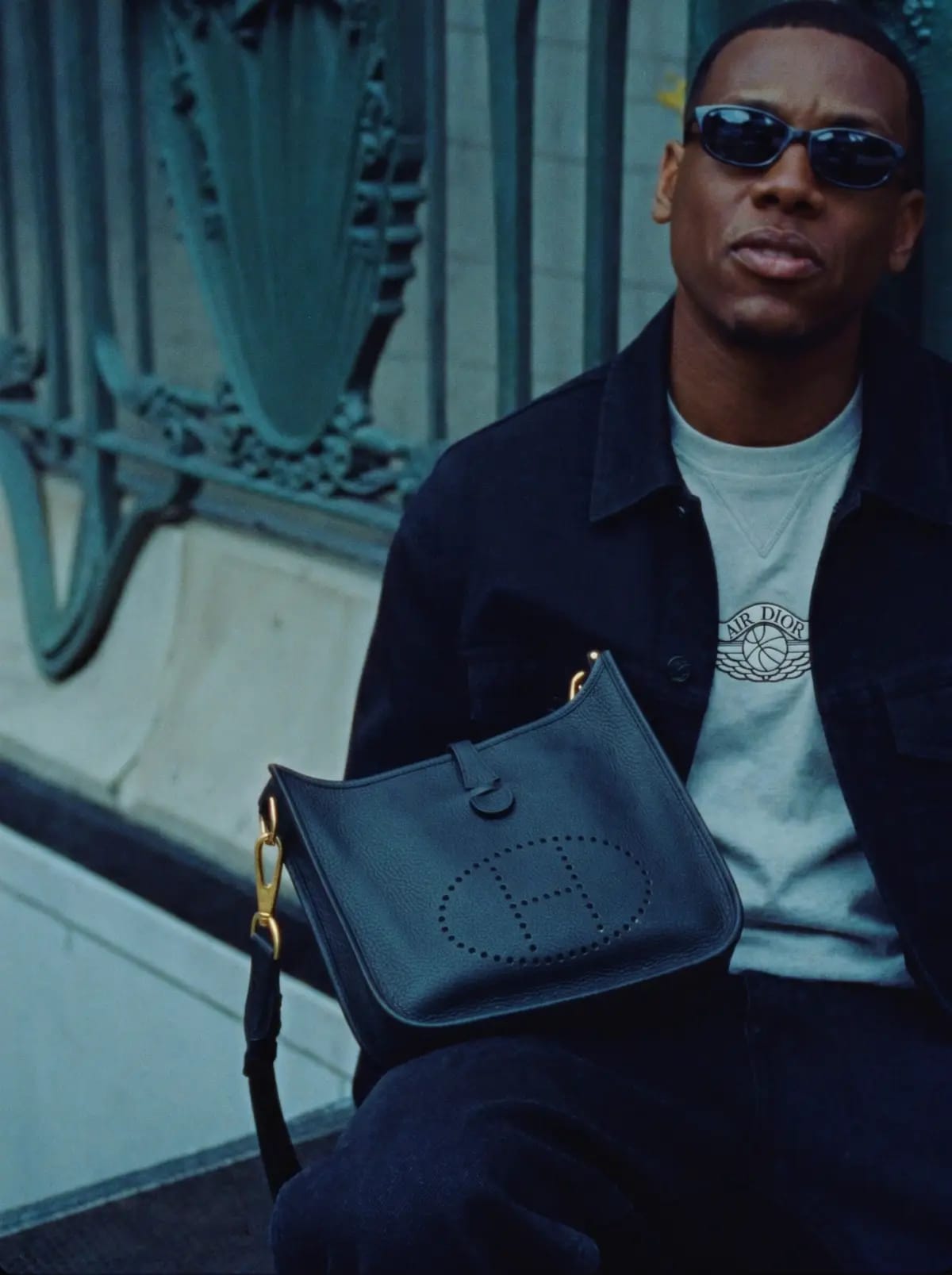
Buying a pre-owned Hermès bag is one of the most exciting — and most delicate — purchasing decisions in the luxury market. A Birkin 30 in Gold Togo leather can change hands for between €8,000 and €18,000 on the secondary market; a Kelly 28 Sellier in black Box regularly reaches €12,000 to €20,000. At these price levels, a mistake is not a mere inconvenience: it is a substantial financial loss, sometimes compounded by deep emotional disappointment.
At Old Fashioned Club, we have supported our clients in buying pre-owned Hermès pieces since 2017. In nearly ten years of activity in our showroom at 4 rue des Saussaies (Paris 8th), we have seen every kind of scenario: the superb deal, the perfect gift, but also — too often — the disillusionment of poorly informed buyers who had bought elsewhere. This article lists the 8 most common mistakes when buying a pre-owned Hermès, and gives you the keys to avoid them.
Mistake #1: Not checking authenticity — Hermès super fakes are increasingly sophisticated
This is the gravest and, unfortunately, the most widespread mistake. Hermès counterfeits have reached an alarming level of sophistication in recent years. The old fakes were identifiable to the naked eye: poor stitching symmetry, cheap hardware, rigid plasticky leather. Today's "super fakes", made mainly in China and Turkey, reproduce Togo leather, saddle stitching and even the interior marking with disturbing precision.
The essential authentication points:
- The "Hermès Paris Made in France" marking: on a genuine Hermès, this stamp is heat-pressed into the leather, with an even font and a uniform depth. On fakes, it is often stamped superficially or slightly asymmetrically.
- The shape of the "H" letters on the buckle: the uprights of the H on an authentic buckle flare slightly towards the bottom. On fakes, they are most often perfectly straight.
- The saddle stitching: at Hermès, each bag is sewn by hand by a single craftsperson, with waxed linen thread (on classic models) or waxed synthetic thread for contemporary models. The stitches are perfectly even and of the same tension along the whole length. An irregular stitch, a missing needle hole in the leather, an uneven tension — all warning signs.
- The clochette and the padlock: their weight, the quality of the metal, the smoothness with which the padlock opens, the engraved or stamped marking are reliable indicators.
The solution: Never buy a pre-owned Hermès without a physical inspection or professional expertise. A certificate of authenticity issued by a specialist boutique is non-negotiable.
Mistake #2: Confusing the leathers — Togo, Clémence, Epsom, Box — a major impact on price and hold
Hermès uses around twenty different leathers, and confusing the main ones is extremely common among uninitiated buyers. Yet the choice of leather directly influences a bag's value, its robustness, its behaviour over time and its resale price.
The four main leathers to know:
Togo is a grained full-grain calfskin, supple and scratch-resistant. It is the most popular Hermès leather with buyers, notably for the Birkin and the Kelly. It "holds" its shape well without being rigid, resisting nail marks and light scratches. A Birkin 30 in Togo in good condition (grade B) is generally worth between €9,000 and €14,000 depending on the colour.
Clémence is often confused with Togo. It is also a grained calfskin, but the grain is slightly larger and the suppleness more pronounced — to the point where Clémence tends to "sag" over time, notably on large formats. This characteristic is appreciated by some, off-putting to others. For equivalent weight and condition, a Clémence bag sells on average 5 to 10% less than Togo.
Epsom is a pressed calfskin (artificially grained), more rigid and more resistant to stains and water. Its smooth surface makes it less prone to superficial scratches but more vulnerable to deep ones. Epsom is often chosen for Kelly Sellier owing to its impeccable hold. Slightly lower price than Togo on the secondary market, except for rare colours.
Box is a smooth, glossy calfskin, one of the historic Hermès leathers. Magnificent but temperamental: it develops a superb patina over time, but is very sensitive to scratches and marks. A Kelly 28 Box in very good condition (grade A) can be worth €15,000 to €22,000, but a scratched Box loses considerable value. Regular care is imperative.
The solution: Learn to identify each leather before buying. In boutique, do not hesitate to ask for confirmation of the leather type. At OFC, each product page specifies the leather, its finish and its predictable long-term behaviour.
Mistake #3: Ignoring the craftsperson stamp numbers — the Hermès dating system
Hermès places in each bag a letter within a square (or a circle depending on the years) that indicates both the craftsperson who made the bag and the year of production. It is the house's official dating system, and it is fundamental for authenticating a bag and assessing its age.
How the system works:
- From around 1945 to 1970, bags bore a simple serial number.
- From the 1970s, Hermès introduced letters within a square to indicate the year of manufacture: A (1973), B (1974), C (1975)... and so on up to Z (1997). After Z, the system restarted with A within a circle (1999), B within a circle (2000), etc.
- Since 2015, Hermès has discreetly modified its coding system, making dating less immediately legible for the general public.
This stamp is generally heat-stamped under a leather tab inside the bag, or directly on the strap. It is accompanied by a number or letter identifying the craftsperson.
Why it matters: A bag dated to the 1990s in black Box with a naturally developed patina has heritage value and a history. A recent bag presented as "vintage" with an inconsistent stamp is an immediate warning sign. Moreover, the year of manufacture directly influences the price: certain vintages are more sought after than others, notably for special editions or discontinued colourways.
The solution: Always check the consistency between the craftsperson stamp, the apparent condition of the leather and the seller's claims. A bag presented as "from the 80s" with leather showing no patina warrants explanation.
Mistake #4: Neglecting the condition of the stitching and hardware
The stitching and hardware are two of the first elements to examine when buying a used Hermès, and yet they are often skimmed over in favour of the overall look of the leather. This is a costly mistake.
The stitching: On an authentic, well-maintained Hermès, the stitching remains intact for decades. But wear always begins in the same places: the lower corners of the bag, the junction between the gussets and the base, and the stitching around the interior pocket. A slightly frayed thread at a single point may seem trivial — it may also indicate that the entire seam is weakened. Stitch restoration by a non-Hermès-specialist cobbler can significantly devalue a bag.
The hardware: Hermès clasps, rings, buckles and padlocks are in palladium-, gold- or rose-gold-plated brass. The plating, over time, can oxidise or tarnish, especially in contact with perspiration or certain cosmetics. Tarnished hardware on an otherwise excellent bag remains a depreciating flaw. Also check the smoothness of the clasp's opening (the Kelly's "turn-lock" or the Birkin's hook system): a stiff or hard-to-operate mechanism indicates wear or misuse.
The solution: Methodically inspect every centimetre of stitching and each piece of hardware. Ask for high-resolution photos in natural light, and if buying in boutique, take the time you need. At OFC, we rate the condition of each bag precisely: grade A (near new), grade B (excellent, light signs of use), grade C (good condition, visible signs of wear).
Mistake #5: Relying solely on online photos
The pre-owned luxury market has become largely digital, and it is now common to buy a second-hand Hermès without ever having seen the bag in person. This practice carries real risks that photos, however beautiful, cannot neutralise.
What photos do not show:
- The smell of the leather (a damaged or poorly stored leather can give off a smell of mould or plastic)
- The suppleness or rigidity of the leather to the touch
- The micro-scratches and cracks that only appear under raking light
- The internal condition of the lining (stains, base wear)
- The true rendering of the colour (which varies enormously depending on the photo's lighting)
- The consistency of the raised stitching
Unscrupulous sellers — and even some well-meaning ones — use filters, light retouching or flattering angles that conceal real flaws. On some online platforms, the photos do not always correspond exactly to the object sold.
The solution: Systematically request short videos under different lights, photos of the interior (base, zipped pocket, lining), of the bottom of the bag and of every angle. Better still, favour physical boutiques like OFC where you can examine the bag in person in our Parisian showroom, or request a personalised expertise video.
Mistake #6: Paying too much (or too little) — understanding Hermès pre-owned pricing
The Hermès secondary market is one of the most complex in luxury. Unlike Louis Vuitton or Chanel, whose pre-owned prices follow relatively predictable ranges, Hermès experiences considerable price variations depending on factors that uninformed buyers do not master.
The factors that make the price vary:
- The model and size: a Birkin 25 often sells for more than a Birkin 35 owing to manufacturing rarity and increased demand for small formats
- The leather: black Box and Porosus crocodile command significant premiums; Clémence or Veau Éverain are less valued
- The colour: Electric Blue, Rouge de Cœur, Rose Sakura or Chartreuse Green in limited edition can be worth 30 to 60% more than a standard colourway such as Gold or Étoupe
- The hardware: Gold Hardware (GHW) vs Palladium Hardware (PHW) — the preference varies by market; in Asia, GHW often commands a premium
- Condition: the difference between grade A and grade B can represent €1,000 to €3,000 on a Birkin 30
Indicative price ranges in 2026:
| Model | Grade A | Grade B | Grade C |
|---|---|---|---|
| Birkin 25 Togo | €11,000 – €16,000 | €9,000 – €13,000 | €7,000 – €9,000 |
| Birkin 30 Togo | €10,000 – €15,000 | €8,000 – €12,000 | €6,500 – €8,500 |
| Kelly 28 Sellier | €11,000 – €18,000 | €9,500 – €14,000 | €7,000 – €10,000 |
| Kelly 32 Retourné | €9,000 – €13,000 | €7,500 – €11,000 | €6,000 – €8,000 |
| Evelyne TPM/PM | €900 – €1,500 | €700 – €1,100 | €500 – €750 |
The solution: Research market prices through several sources before buying. An abnormally low price should be a warning sign (fake or hidden problem); an excessively high price with no clearly explained justification warrants negotiation or comparison.
Mistake #7: Buying without a certificate of authenticity or guarantee
This is perhaps the most avoidable mistake — and yet thousands of buyers still skip this step each year, lured by a slightly lower price or by misplaced trust in a private seller.
A certificate of authenticity issued by a specialist boutique is not a mere administrative document: it is a legal guarantee, a financial protection and a token of transparency. It attests that the bag has been expertised by professionals trained in Hermès authentication, and it protects you in case of dispute.
Moreover, some serious pre-owned boutiques also offer a guarantee on the described condition of the bag — that is, if an unmentioned flaw is discovered in the days following the purchase, a return or exchange is possible.
Buying from a private individual, on a generalist marketplace (Vinted, Leboncoin) or via a platform that does not itself carry out the expertise (and merely connects buyer and seller) exposes you to significant risks: fakes, overstated condition, no recourse.
The solution: Always buy from a boutique that issues its own certificate of authenticity, with the boutique's name, the precise description of the bag and its signature. At Old Fashioned Club, every purchase comes with an OFC certificate of authenticity, without exception.
Mistake #8: Forgetting the ancillary costs — care, restoration, customs
The purchase price of a pre-owned Hermès is not the total cost of ownership. Ancillary costs, often overlooked, can represent several hundred or even several thousand euros.
Regular care: An Hermès leather bag requires care at least twice a year: cleaning, nourishing the leather, protection against humidity. Professional care from a specialist (Hermès no longer takes back bags bought from third parties to restore them) costs between €80 and €250 depending on the work required.
Restoration: If you buy a bag in grade C with weakened stitching or very dry leather, a complete restoration can cost between €400 and €1,200 at a specialist atelier. Factor this cost into your assessment of the total price.
Customs (if buying outside the EU): If you buy a pre-owned Hermès from the United States, Japan or Hong Kong via a foreign site, you will have to pay import duties (around 2.5% for leather bags) plus French VAT (20%) on the value of the bag. On a €10,000 Birkin, that represents more than €2,000 in additional costs. Many buyers are unaware of this.
The solution: Set your budget including all foreseeable ancillary costs. If you buy from a French boutique like OFC, you completely avoid customs surprises — VAT is included in the displayed price, and international delivery is provided across the country.
Bonus section: How OFC secures every purchase
At Old Fashioned Club, our acquisition and authentication process has been designed to eliminate each of the mistakes described above. Here is how we proceed:
Three-level authentication: Every Hermès piece that enters our stock is examined by at least two experts, according to a proprietary authentication protocol covering 47 checkpoints: leather, stitching, hardware, craftsperson stamps, lining, accessories (padlock, clochette, key, dust bag, box if available).
Precise and transparent condition rating: We apply a standardised condition grid (A, B, C) and describe each identified flaw — however minor — on the product page. No surprises on receipt.
OFC certificate of authenticity: Every purchase comes with a signed certificate, which includes the complete description of the bag (reference, leather, colour, hardware, condition, craftsperson stamp number if legible), and which constitutes an official document in case of later resale.
Personalised advice: For purchases over €5,000, we systematically offer a consultation appointment in our showroom (4 rue des Saussaies, Paris 8th, Mon-Fri 10am-7pm, Sat 11am-7pm), or a video exchange for clients outside Paris.
After-sales service: If an undescribed problem is found within 48 hours of receiving the bag, our team handles the case as a priority.
Discover our current selection of pre-owned Hermès bags — Birkin, Kelly, Constance, Evelyne and many others, expertised and certified.
Shop the story
Frequently asked questions
- How can you tell a genuine pre-owned Hermès from a fake?
- Authenticating an Hermès requires multi-point expertise: the quality and type of leather, the regularity of the saddle stitching, the quality of the hardware (weight, engraving, finish), the interior craftsperson stamp, the lining, the accessories. Without specific training, it is very difficult for a private individual to distinguish a sophisticated super fake from an original. Always call on a specialist boutique with a formal authentication process.
- Is the Hermès letter-dating system reliable for authenticating a bag?
- It is an important indicator but not sufficient on its own. The letter within a square or a circle indicates the year of manufacture and the craftsperson. An inconsistency between this letter and the apparent condition of the bag (a bag "dating from 1990" but with leather showing no patina) is a warning sign. But a fake can also reproduce this stamp: which is why authentication must be holistic.
- Is it better to buy a pre-owned Hermès in boutique or online?
- In a specialist boutique, you benefit from professional expertise, a real physical inspection and a certificate of authenticity. Online, the risks are higher unless the platform itself carries out the expertise and issues a guarantee. If you buy online, demand detailed proof (videos, multi-angle photos) and a certificate of authenticity.
- What is the price difference between a new Birkin and a pre-owned Birkin?
- Paradoxically, some pre-owned Birkins (notably in rare colours or crocodile) sell above the Hermès boutique price — when they are available in boutique, which is rarely the case. For common Togo models, the secondary market sits between 80% and 130% of the boutique price depending on condition and colour.
- Can a pre-owned Hermès be serviced directly at Hermès?
- Hermès agrees to carry out certain spa and care operations on second-hand bags, notably if you are a client of the brand. But lead times can be long (6 to 18 months) and the work undertaken remains limited. For larger restorations, independent specialist ateliers offer excellent services in much shorter timeframes.
- Do pre-owned Hermès bags appreciate over time?
- Some models and colourways, yes — the Birkin and the Kelly in rare colours or exotic leathers have shown steady appreciation over the long term. But this is not universal: a bag in degraded condition or an ordinary colourway can, on the contrary, depreciate. Investing in pre-owned luxury should first be motivated by the pleasure of use.
- What is a "grade A" at Old Fashioned Club?
- A bag rated grade A at OFC is in near-new condition: no visible scratches, hardware without oxidation, clean lining, accessories present. It may have been worn a few times but shows no significant signs of use. Grade B corresponds to excellent condition with light normal signs of use (slight marks on the base, slightly tarnished hardware). Grade C indicates a good general condition with visible signs of wear but no structural damage.
- Ready to make your first pre-owned Hermès purchase with confidence?
- Our team awaits you at the Old Fashioned Club showroom, 4 rue des Saussaies, Paris 75008 — Monday to Friday from 10am to 7pm, and Saturday from 11am to 7pm. Every purchase comes with a certificate of authenticity and international delivery. Discover our selection of pre-owned Hermès bags at oldfashionedclub.com/sacs-hermes-occasion. Would you also like to sell your Hermès piece? Contact us for a free estimate.
Related articles
Pre-Owned Loro Piana: The Quiet Luxury Buyer's Guide
Cashmere, vicuña, Summer Walk loafers: icons, materials, authentication and resale value of pre-owned Loro Piana. The OFC guide to buying quiet luxury at a fair price.

Pre-Owned Givenchy: A Guide to the Antigona, Pandora & Parisian Chic
Antigona, Pandora, the legacy of Hubert de Givenchy: icons, leathers, authentication and resale value of pre-owned Givenchy. The OFC guide to buying at a fair price.

How to Estimate the Value of Your Pre-Owned Luxury Bag
How to estimate the value of your pre-owned luxury bag: house, model, condition, rarity, colour, accessories. The factors that set the price, explained by Old Fashioned Club.