
Investing in a Pre-Owned Hermès Birkin: Returns and Advice 2026
By The Old Fashioned Club team
Investing in a pre-owned Hermès Birkin: returns, sizes to favour, leathers that are rising. A complete guide by Old Fashioned Club Paris.
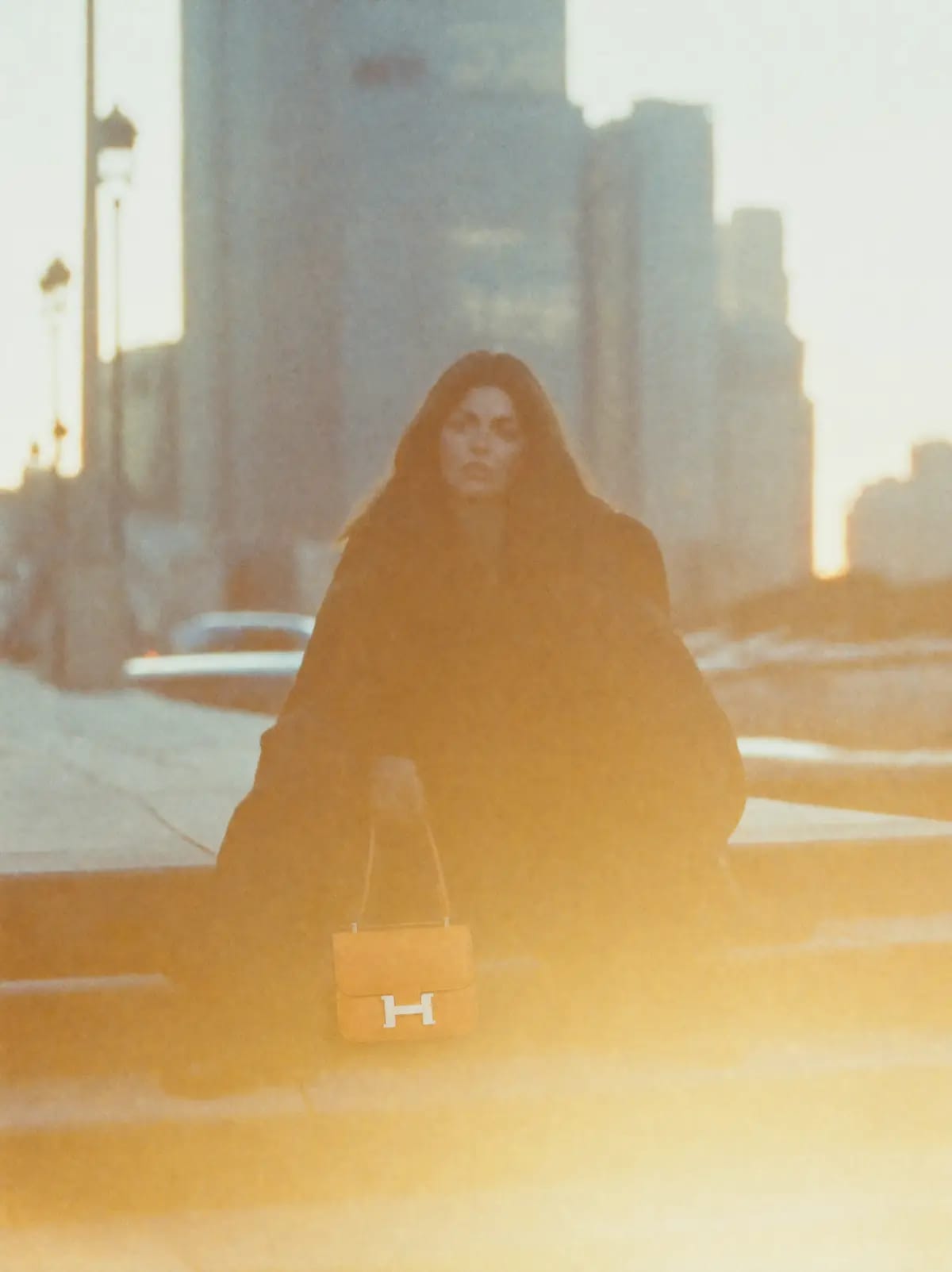
In 2016, the annual Knight Frank Wealth Report published a figure that electrified the world of alternative investment: over the previous 10 years, the Hermès Birkin had delivered an average annual return of around 14.2%, outperforming gold (+1.5%), the S&P 500 (+6.4%), and luxury residential property in most of the world's major cities.
Since then, the Birkin has officially entered the vocabulary of wealth managers and family offices. It is discussed at conferences on alternative assets, studied by economists, and increasingly integrated into serious wealth-diversification strategies.
But what about 2026? Does the performance continue? Which models should you buy? What risks should you take into account? As a Parisian boutique specialising in pre-owned luxury since 2017, Old Fashioned Club gives you its no-nonsense analysis.
The Birkin as a financial investment: the key figures
The Birkin did not become a financial asset by chance. Several structural fundamentals have fuelled its appreciation for more than four decades.
An appreciation of +500% in 30 years
Between 1995 and 2025, the average price of a Birkin 30 in Togo leather with gold hardware rose from around €2,500 to over €12,000 in the Hermès France boutique. On the pre-owned market, the same bag in excellent condition trades between €15,000 and €22,000. That is a multiplication by 6 to 8 depending on the case, an appreciation of over 500% over the period.
By comparison, gold rose by around 400% over the same period, the CAC 40 by around 300% (dividends reinvested), and Parisian property by around 350%.
Remarkable performance during crises
One of the most powerful arguments in favour of the Birkin as an asset is its resilience in times of crisis. During the great recession of 2008-2009, when global stock markets lost 40 to 60% of their value, Birkin prices on the secondary market did not fall. On the contrary, they rose slightly.
The reason is intuitive: Birkin buyers are people whose wealth is sufficiently diversified that they are not forced to sell their assets in times of financial stress. Supply on the secondary market therefore did not increase massively, while demand, driven by Asian buyers (particularly Chinese and Japanese) whose economies were less affected, remained strong.
This partial disconnection from classic economic cycles is precisely what makes the Birkin an interesting diversification asset.
The rule of Hermès increases
Hermès raises its prices almost systematically, often twice a year. Between 2020 and 2026, boutique prices in France rose by around 35 to 45% depending on the model. These institutional increases create a valuation floor beneath the pre-owned market: if the boutique sells a Birkin 10% more expensively this year than 18 months ago, the same second-hand bag mechanically sees its reference value rise.
Birkin vs shares vs gold vs property: long-term performance comparison
| Asset | Average annual return (2000-2025) | Volatility | Liquidity |
|---|---|---|---|
| Hermès Birkin (pre-owned market) | ~14% | Low | Moderate |
| Gold | ~8% | Moderate | High |
| S&P 500 (dividends reinvested) | ~10% | High | Very high |
| CAC 40 (dividends reinvested) | ~6% | High | Very high |
| Paris property (residential) | ~7% | Low | Low |
| French government bonds (10 years) | ~2% | Very low | High |
Several clarifications are needed to read this table honestly:
The liquidity of the Birkin is real but less immediate than that of a stock portfolio. Selling a Birkin takes from a few days (via a reseller) to a few weeks (in a direct sale). This is not an obstacle if the Birkin represents a fraction of your total wealth, but it must be factored into your allocation.
Past returns do not guarantee future returns. This applies to all assets — including the Birkin. The performance of the last two decades is exceptional and is largely explained by the rise of Asian demand (notably Chinese) and the emergence of a wealthy millennial class that buys luxury differently from its parents.
Care is a cost to factor in. A leather Birkin requires regular care to maintain its value. Nourishing the leather (a quality cream), protection against rain (a suitable waterproofer), and correct storage (in its pouch, padded to maintain the shape, away from heat and direct light) are not high costs, but they exist.
Which Birkins to favour for investment?
Not all Birkins are equal as an investment. Here are the decisive criteria, in order of importance.
The size: 25 and 30 dominate
The Birkin 25 is, in 2026, the size that commands the highest premiums on the secondary market. Its production is limited, its demand is strong (driven notably by the trend for small bags), and its appreciation potential remains the highest in the range. For a pure investment, this is the format to favour first.
The Birkin 30 is the "safe" value par excellence. It is the most-traded, most liquid format on the secondary market. Its liquidity is an asset: if you need to resell quickly, a Birkin 30 in a good colour sells in a few days at any serious reseller.
The Birkin 35 and Birkin 40 command lower premiums today. The fashion trend is for more compact formats, and these large sizes are less sought after than 15 years ago. They remain solid assets, but with lower appreciation potential than the 25 and 30 formats.
Exotic leathers: maximum performance, maximum risk
Birkins in exotic leather — niloticus crocodile (the most prestigious), Porosus crocodile (the rarest), ostrich (vivid and structured) and lizard (refined but fragile) — post the highest absolute valuations.
A Birkin 30 in black niloticus crocodile with gold hardware (the "Croc Birkin") trades today between €80,000 and €150,000 on the pre-owned market. Exceptional examples in a rare colour (Indigo Blue, Dark Green, Rouge H) have reached six-figure prices at auction.
The performance is spectacular, but the risks are also higher:
- The market is narrower (fewer buyers at these prices)
- CITES regulations (protection of species) impose customs constraints on export
- The condition of the leather is even more critical than on a normal leather
Colours for investment: playing it safe or going for rarity
For maximum liquidity: Black (Noir), Étoupe (greyish pink), Gold (golden camel), Fauve. These colours are timeless, always in demand, and resell quickly at a good price.
For the rarity premium: Electric Blue, Rouge Casaque, Cyprès Green, Amber Yellow, Sapphire Blue. These colours are not produced every season — when they disappear from the catalogue, their pre-owned value climbs.
To avoid for pure investment: very dated pastel colours (some pinks or lavenders of the 2000s), and overly seasonal colours that can go out of fashion.
The hardware: gold vs silver
Gold hardware is historically the benchmark and commands a slight premium. Palladium (silver) hardware has appreciated well and remains very liquid. Rarer hardware (brushed, ruthenium, permabrass) can command premiums on certain specific colours — but their market is narrower.
Condition: condition, condition, condition
The condition of a Birkin is the single most decisive factor in its resale value. The standard pre-owned-market terminology uses the following grades:
- Brand New / Deadstock: never used, with all original accessories. Maximum premium, sometimes more than +30% over the current boutique price.
- Excellent condition: very little used, with no visible marks. Sells at boutique price or above.
- Very Good condition: some light signs of use. Slight discount of 5 to 15% depending on the leather.
- Good condition: visible but even wear. Discount of 20 to 35%.
- Fair condition: significant wear. Discount of 40% and more.
For an investment Birkin, aim for at least "Excellent condition".
The factors that raise (or lower) a Birkin's value
What raises the value
Boutique price increases: each Hermès increase mechanically pulls the pre-owned market upwards. Buying before an announced increase is a simple and effective strategy.
The scarcity of certain colours: when a colour is withdrawn from the catalogue (such as Bleu Roi or certain specific greens), its value on the secondary market almost systematically rises in the following years.
Asian demand: China, Japan, Singapore and South Korea are the most powerful drivers of the global pre-owned market. A rise in demand in these markets quickly translates into a global price increase.
Media appearances: a product placement in a Netflix series, being carried by a high-impact celebrity (Kim Kardashian, Rihanna, BLACKPINK) can trigger a demand spike for a specific colour or size.
What lowers the value
Degraded condition: damaged leather, tarnished handles, worn corners, scratched hardware — each visible flaw costs value. A poorly maintained Birkin can lose 30 to 50% of its potential value.
Non-Hermès repairs: if a Birkin has been repaired outside the Hermès ateliers (at a cobbler or a non-approved craftsperson), this can affect its value and its future resale.
Out-of-fashion colours: some colours correspond to a very dated aesthetic that will not return any time soon.
Market saturation: if Hermès were one day to significantly increase its production — which the house has always refused to do so far — the structural scarcity that supports pre-owned prices would erode.
How to buy a pre-owned Birkin for investment
Buying a Birkin for investment purposes follows a different logic from buying for personal use.
Step 1: Define your budget and time horizon
An investment in a Birkin is optimal over a horizon of 5 to 10 years minimum. Over shorter periods, the market's moderate liquidity and transaction costs (the reseller's commission on purchase and sale) can erode part of the gain.
Step 2: Choose the right piece
On the basis of the criteria detailed above: Birkin 25 or 30, standard leather (Togo, Clémence or Epsom) in a classic or rare colour, gold hardware, excellent or new condition.
Step 3: Buy via a certified reseller
Never buy an investment Birkin from a private individual without professional expertise. The risk of counterfeiting, even for an informed buyer, is real. A certified reseller such as Old Fashioned Club guarantees authenticity in writing and provides a certificate that holds up on resale.
Step 4: Keep all the documents
To maximise resale value, scrupulously keep: the certificate of authenticity, the purchase receipt, the original pouch, and, if available, all original accessories (padlock, keys, mirror). A "complete" Birkin with all its accessories is systematically worth more than a Birkin alone.
Step 5: Care for it properly
Nourish the leather two to four times a year with a suitable cream (such as Saphir Crème Universelle or the Hermès house cream). Store the bag in its pouch, stuffed with a fabric filling to maintain its shape. Avoid any prolonged exposure to direct sun and humidity.
Risks and precautions: what you need to know
Investing in a Birkin is not without risks. An honest analysis requires naming them clearly.
The risk of counterfeiting: the pre-owned luxury market is polluted by high-quality counterfeits. A fake Birkin is worth nothing as an investment. This risk is completely eliminated by buying from a certified reseller.
The fashion risk: the history of luxury is dotted with objects that have gone through periods of disaffection. Although the Birkin is more than a trend — it is a deep cultural symbol — no asset is 100% immune to changing tastes.
The liquidity risk: if you need to sell quickly, you could be forced to accept a below-market price. Always keep sufficient liquidity elsewhere so as never to be in a forced-sale position.
The regulatory risk: for exotic leathers, CITES regulations may evolve and complicate exports. For standard leathers, this risk is negligible.
The concentration risk: never place all your savings in luxury bags. The Birkin is an excellent diversification asset — not a wealth strategy on its own. The general rule of wealth advisers is to limit alternative assets (including luxury, art, watches) to 10-20% of a total portfolio.
Old Fashioned Club: your partner for investing in pre-owned luxury
Investing in pre-owned luxury requires a trusted partner — someone who knows the market intimately, who can guide you towards the right pieces, and who supports you both on purchase and on resale.
Since 2017, Old Fashioned Club has been that benchmark in Paris. Our boutique at 4 rue des Saussaies, Paris 75008 (Mon-Fri 10am-7pm, Sat 11am-7pm) offers a rigorously authenticated selection of pieces from Hermès, Chanel, Louis Vuitton, Dior and other major houses.
What sets us apart in an investment approach:
- 15-point authentication protocol: every piece is verified by our experts before entering stock
- Certificate of authenticity with every purchase, with a refund commitment in case of non-authenticity
- Personalised advice: our experts guide you towards high-potential pieces according to your budget and your horizon
- Buyback service: when you wish to resell, we buy back directly at the best market price — with no commission to pay to an intermediary
- International delivery everywhere in France, for clients who cannot travel to Paris
Explore our current selection of pre-owned Hermès bags, and also see our collection of pre-owned Louis Vuitton bags, pre-owned Chanel bags, pre-owned Dior bags, and our entire catalogue at all our pre-owned luxury bags.
If you would like to entrust us with a Birkin or any other luxury bag for resale, our selling service is fast, transparent, and offered on the best terms in the market.
Shop the story
Frequently asked questions
- Is the Birkin really a better investment than gold?
- Over the last 25 years, yes. According to data from the Knight Frank Luxury Investment Index and various independent studies, the Birkin has significantly outperformed gold over the long term. On the other hand, gold is far more liquid and requires no care. Both assets have their role in a wealth-diversification strategy.
- What is the minimum you need to invest for it to make sense?
- A Birkin 30 in Togo in a good colour, in excellent condition, sits between €14,000 and €20,000 on the pre-owned market in 2026. Below this entry ticket, transaction costs (purchase + resale) represent too high a proportion of the total value. For a Birkin 25 in perfect condition, expect rather €16,000 to €22,000.
- Is it better to buy a new Birkin in boutique or pre-owned for investment?
- Both can be relevant, but pre-owned has an advantage: you buy at a market price reflecting real value, you benefit from immediate availability, and you can choose precisely the colour/size/hardware combination that maximises future demand. New in boutique is excellent, but access to it requires years of client relationship.
- Is a 1990 Birkin worth more than a recent one?
- Not necessarily. Value depends more on condition and rarity than on age. A 1990 Birkin in poor condition may be worth less than a 2015 Birkin in perfect condition. On the other hand, a vintage Birkin in excellent condition in a rare colour or combination can reach extraordinary prices at auction — the collectors' market is distinct from the standard market.
- Can Hermès prices ever fall?
- Theoretically, yes. But Hermès has maintained an almost uninterrupted increase for decades, including during crises (2008, 2020). The only notable falls have been linked to currency shocks (when an Asian buyer compares the Paris boutique price with the domestic price, exchange-rate variations come into play). In absolute euro value, Hermès boutique prices have never fallen.
- How long do you need to keep a Birkin to resell it at a profit?
- As a general rule, at least 3 years to absorb transaction costs and realise a net gain. Over 5 to 10 years, the probability of a significant capital gain is historically very high. As with any asset, the long-term horizon is your best ally.
- Is the taxation on reselling a Birkin favourable?
- In France, the sale of movable goods (including luxury bags) is subject to a flat tax of 6.5% of the sale price if the price exceeds €5,000. Beyond that, you can opt for the movable-capital-gains regime (12.8% + 17.2% social levies, i.e. a 30% flat tax), with a 5% allowance per year of ownership beyond the second (total exemption after 22 years). The advice of an accountant or wealth adviser is recommended to optimise your situation. **Ready to invest in pre-owned luxury?** See our selection of pre-owned Hermès bags at oldfashionedclub.com/sacs-hermes-occasion or make an appointment with our team at 4 rue des Saussaies, Paris 75008. Monday to Friday from 10am to 7pm, Saturday from 11am to 7pm. Authenticity guaranteed. International delivery. Free expertise.
Related articles
Pre-Owned Loro Piana: The Quiet Luxury Buyer's Guide
Cashmere, vicuña, Summer Walk loafers: icons, materials, authentication and resale value of pre-owned Loro Piana. The OFC guide to buying quiet luxury at a fair price.

Pre-Owned Givenchy: A Guide to the Antigona, Pandora & Parisian Chic
Antigona, Pandora, the legacy of Hubert de Givenchy: icons, leathers, authentication and resale value of pre-owned Givenchy. The OFC guide to buying at a fair price.
How to Estimate the Value of Your Pre-Owned Luxury Bag
How to estimate the value of your pre-owned luxury bag: house, model, condition, rarity, colour, accessories. The factors that set the price, explained by Old Fashioned Club.