
The Secrets of Alaïa Dressmaking: Craftsmanship, Couture and Perfection
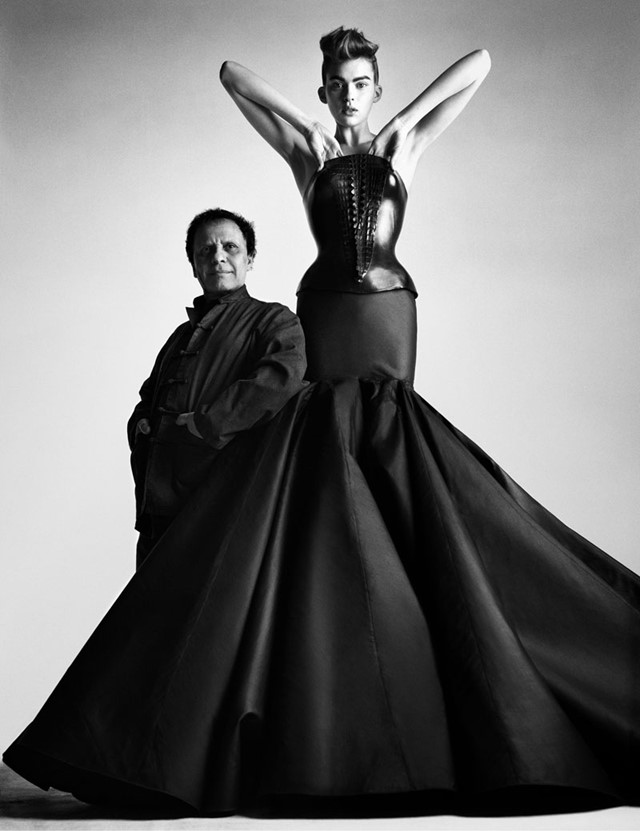
Azzedine Alaïa, often dubbed the "sculptor of fashion", left his mark on the world of haute couture with his timeless creations, showcasing the female body like no other.

Azzedine Alaïa, often dubbed the "sculptor of fashion", left his mark on the world of haute couture with his timeless creations, showcasing the female body like no other. His mastery of the garment, his precision craftsmanship and his unique approach to couture made his dresses works of art in their own right. Each Alaïa dress is far more than a simple garment; it is a technical feat and a demonstration of attention to the smallest detail. But what are the secrets...
The Birth of a Talent and the Art of Sculptural Couture
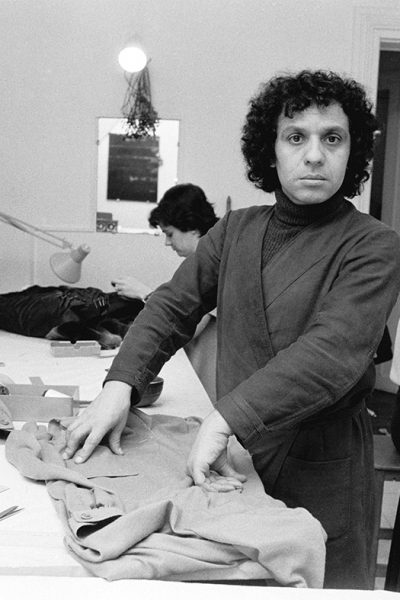
Before delving into the construction details, it is essential to understand the influence of Alaïa's training on his style. Born in Tunisia, Azzedine studied sculpture at the Beaux-Arts in Tunis. This artistic training enabled him to approach the human body with a sculptor's eye, seeking to embrace its forms and reveal its natural beauty. When he arrived in Paris in the 1950s, he started out as a tailor at Dior before going solo.
The Choice of Materials: An Obsession with Quality
The first step in creating an Alaïa dress begins with the selection of fabrics. For Azzedine, the choice of materials is crucial because they define the way the garment will interact with the body. He chose thick fabrics such as jersey, stretch leather and velvet, known for their ability to sculpt and hold the shape. These materials are selected not only for their texture but also for their durability. Alaïa wanted each dress to withstand the test of time.
In addition to classic materials, he often experimented with technical fabrics such as neoprene or custom-made knits. These innovations allowed his dresses to have a perfect drape while being comfortable to wear. This attention to detail in the choice of materials gives Alaïa dresses their emblematic silhouette, embracing the body while maintaining a clean structure.
The Draping Technique: Between Movement and Structure
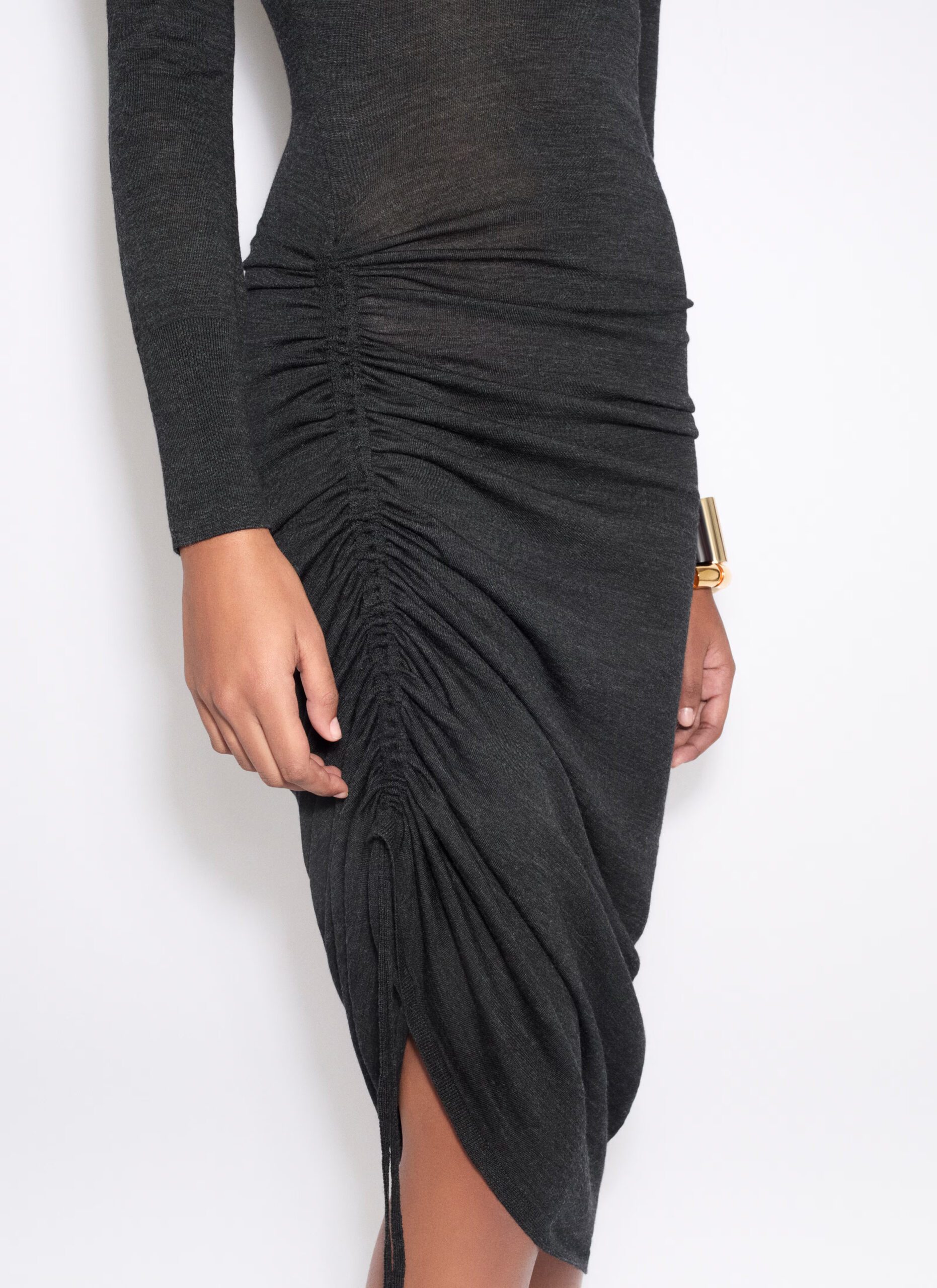
One of the emblematic techniques of the Alaïa house is the use of draping. At first glance, a drape may seem fluid and simple, but at Alaïa, it is carefully calculated to give the impression of movement while preserving structure. Draping is used to accentuate the body's curves, creating points of tension that draw the eye exactly where the designer wishes. Alaïa often used this technique in his asymmetric dresses and his knitted creations.
Each draped dress is unique and requires hours of manual work to position each fold perfectly. Alaïa's seamstresses spent entire days adjusting the folds on the mannequin, until the drape was harmonious from every angle. This patience and meticulousness are what make the difference between a classic drape and an Alaïa-signed drape.
The Play of Invisible Stitching: The "Invisible Stitch" Technique
Another signature of the Alaïa house is the use of the "invisible stitch". Unlike other couturiers who seek to bring out the seams as style elements, Alaïa sought to conceal them. The "invisible stitch" consists of sewing two pieces of fabric together so that the seam is not visible from the outside. This gives the dresses a homogeneous appearance, as if they were moulded from a single piece. This technique is particularly difficult to master...
The Construction of the Silhouette: The Alaïa Belt
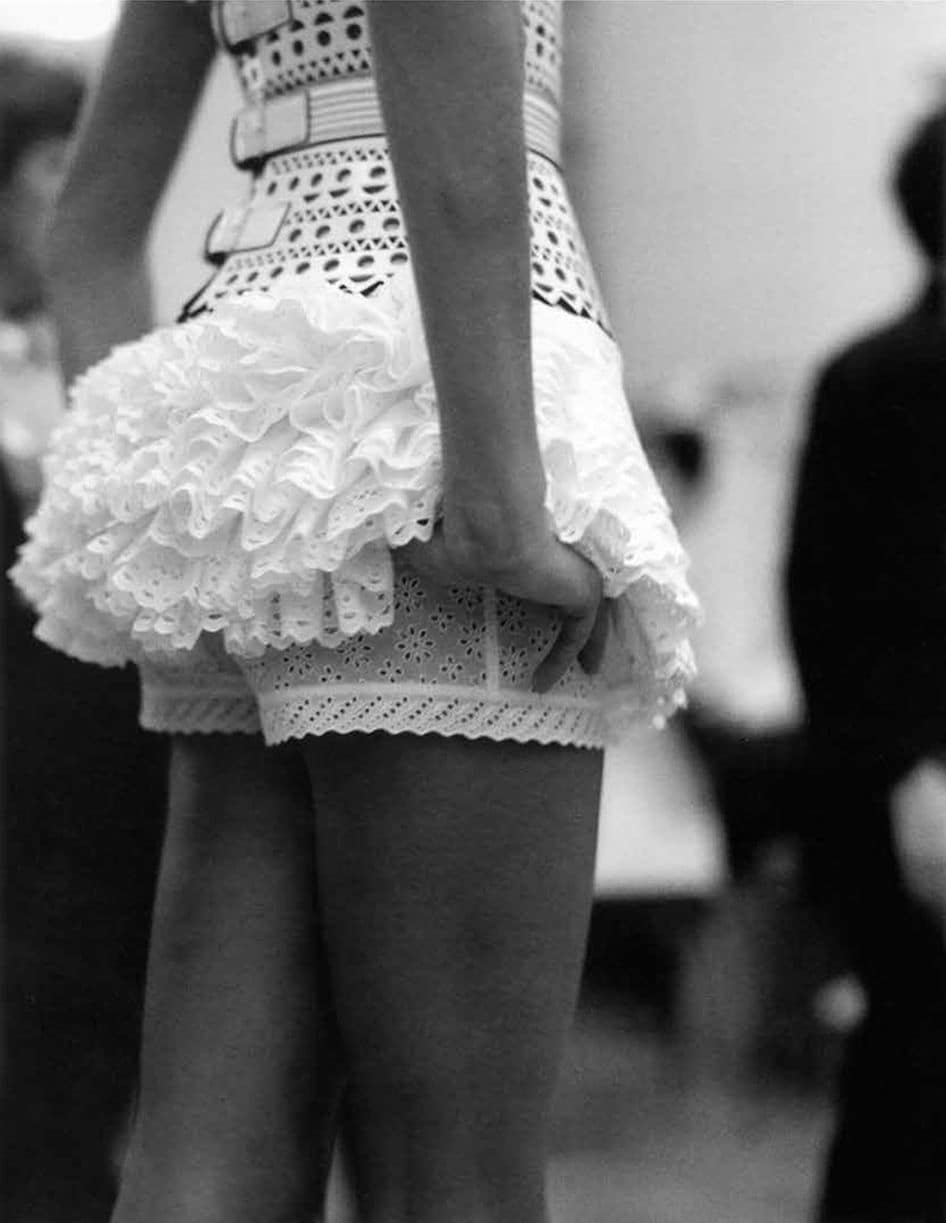
A recurring element in Alaïa's creations is the use of the belt to accentuate the waist. Alaïa firmly believed that the waist is the central point of the female silhouette. He used wide leather belts, often adorned with perforations or metal details, to underline and structure the silhouette. These belts, which have become a house signature accessory, are often integrated directly into the design of the dress.
The Laser-Cutting Technique and the Lace Details
Alaïa also popularised the use of laser cutting in creating complex motifs on his dresses. This technique allows the creation of perforated motifs of great precision, almost reminiscent of goldsmith's work. These cuts are often made on fine leather or technical fabrics, adding a touch of modernity to classic silhouettes. These details, although apparently decorative, play an essential role in the overall design of the dress.
The Art of Moulage: The Perfect Silhouette
One of the reasons Alaïa dresses are so renowned is their ability to perfectly embrace the body's forms. This is made possible by a technique called moulage. Unlike flat pattern-cutting, where the fabric is cut according to standard patterns, moulage consists of draping the fabric directly onto a mannequin or a live model, adjusting the fabric according to the body's curves. This technique allows the creation of unique pieces, perfectly suited to the figure.
Moulage is a slow and demanding process, but it gives Alaïa dresses that "second skin" effect that makes them so iconic. Alaïa himself was known to spend entire nights in his atelier, adjusting each fold and each curve until the dress was perfectly sculpted. This artisanal approach is what sets the Alaïa house apart from many other luxury brands, which often favour faster manufacturing techniques.
A Haute Couture Atelier: The Heart of the Alaïa House
The success of Alaïa dresses lies in the teamwork within the atelier. Unlike many designers, Alaïa was very involved in every stage of the making of his dresses. He worked hand in hand with his seamstresses, sharing his ideas and adjusting every detail. The atelier, located in the Marais in Paris, is an almost sacred place, where each dress is created in an artisanal manner. This atelier is the witness to Alaïa's perfectionist vision. The fabrics are cut by hand, the seams made with unrivalled precision, and each dress is tried on a live model to ensure a perfect fit. Unlike the large houses that subcontract part of their production, Alaïa always insisted that all his pieces be made in-house, thereby guaranteeing absolute control over quality.
Conclusion: Alaïa, The Craftsman of Perfection
Alaïa dresses are far more than garments; they are masterpieces of craftsmanship, embodying the perfect marriage of tradition and innovation. Azzedine Alaïa, with his passion for couture, his respect for the female body and his eye for detail, elevated fashion to the rank of art. Each dress is the fruit of a long and demanding process, combining classic techniques and modern technologies, while remaining faithful to a timeless vision of beauty. Today, Alaïa's legacy continues to inspire new generations of designers, who seek to capture that unique blend of elegance and perfection.
Related articles
Pre-Owned Loro Piana: The Quiet Luxury Buyer's Guide
Cashmere, vicuña, Summer Walk loafers: icons, materials, authentication and resale value of pre-owned Loro Piana. The OFC guide to buying quiet luxury at a fair price.
Pre-Owned Givenchy: A Guide to the Antigona, Pandora & Parisian Chic
Antigona, Pandora, the legacy of Hubert de Givenchy: icons, leathers, authentication and resale value of pre-owned Givenchy. The OFC guide to buying at a fair price.
How to Estimate the Value of Your Pre-Owned Luxury Bag
How to estimate the value of your pre-owned luxury bag: house, model, condition, rarity, colour, accessories. The factors that set the price, explained by Old Fashioned Club.