
Pre-Owned vs New: 7 Reasons to Buy a Pre-Owned Luxury Bag in 2026
By The Old Fashioned Club Team
Why buy pre-owned rather than new in 2026? Price, authenticity, sustainability, impossible-to-find rarities… 7 good reasons according to OFC Paris.
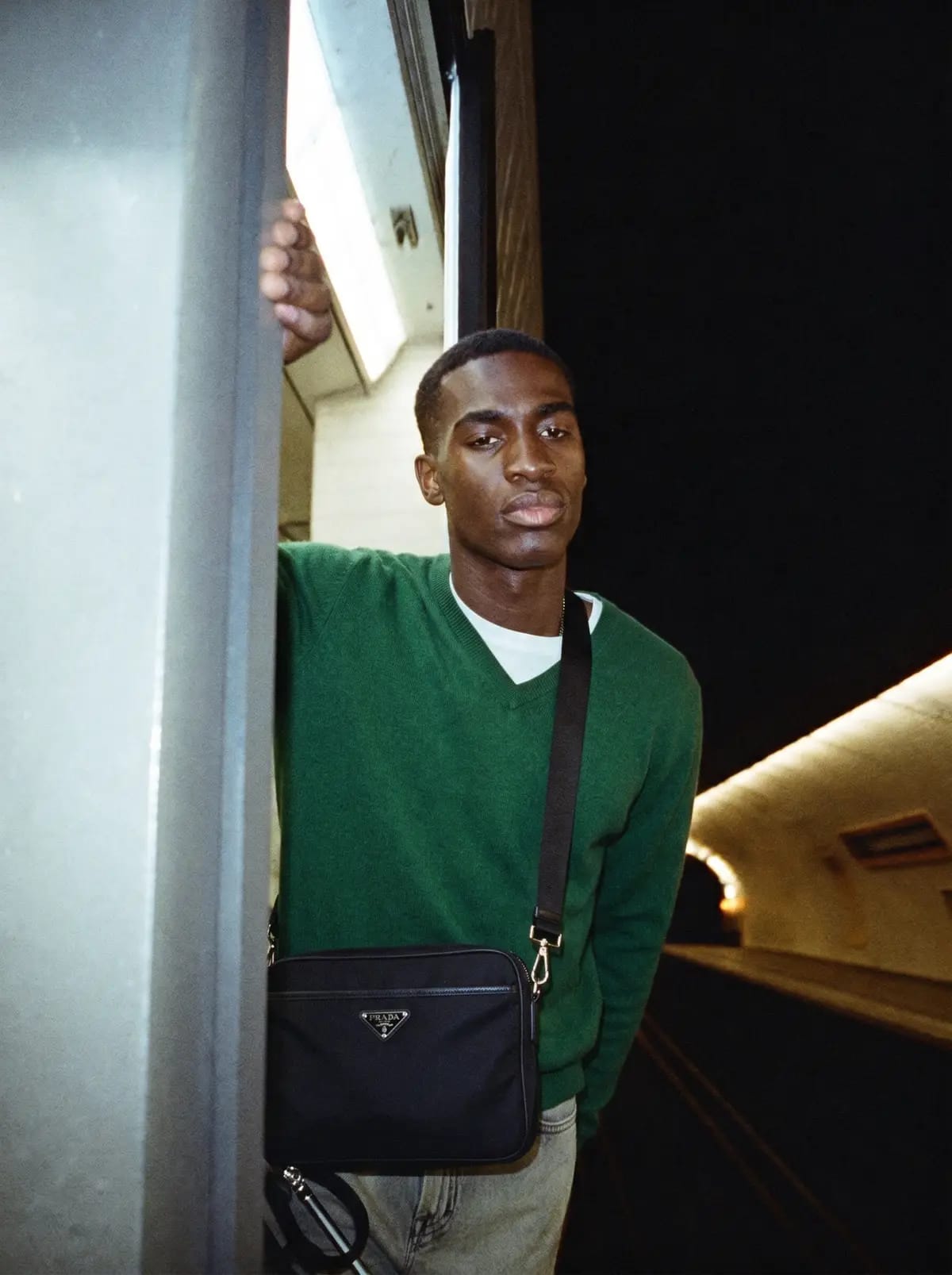
The pre-owned luxury market long suffered from a stubborn prejudice: that buying second-hand means buying by default, because you cannot afford new. That idea is not only false — it is now completely outdated. In 2026, buying a pre-owned luxury bag is a deliberate, informed, often strategic choice, made by clients of every profile: seasoned collectors, young urban professionals, experienced fashion lovers, or simply people who refuse to pay full price for something they can find in better condition, rarer and more interesting on the secondary market.
Bain & Company confirmed it in its latest projections: the luxury resale market will represent 14% of the total luxury market by 2030, up from less than 8% in 2020. This is not a niche. It is a revolution already underway, and the great houses themselves have understood it — some, like Richemont, have even acquired resale platforms so as not to miss the turn.
At Old Fashioned Club, a pre-owned luxury boutique in the heart of the 8th arrondissement of Paris since 2017, we guide clients through this choice every day. Here are the seven concrete, documented reasons why buying pre-owned in 2026 is often the smartest decision you can make.
Reason #1: Price — up to 50% savings on iconic pieces
This is the most immediate reason, and it deserves to be faced with precise figures. The great luxury houses have adopted a particularly aggressive pricing policy in recent years. Chanel raised its prices by more than 90% between 2019 and 2024. Hermès, Louis Vuitton and Dior have followed comparable trajectories, with regular annual increases of 5 to 12%.
The concrete result: a Chanel Classic Flap Medium that cost €3,200 in boutique in 2015 now costs more than €9,500. The same bag, bought pre-owned in excellent condition, can be found between €6,000 and €7,500. The saving is immediate and significant.
Take other precise examples:
| Model | New boutique price 2026 | Pre-owned price, excellent condition | Saving |
|---|---|---|---|
| Chanel Classic Flap Medium | ~€9,500 | €6,000 – 7,500 | 20-37% |
| Hermès Birkin 30 Togo | ~€12,000 (if available) | €13,000 – 18,000 | N/A (rarity premium) |
| Lady Dior Medium | ~€4,200 | €2,000 – 3,000 | 28-52% |
| Louis Vuitton Speedy 30 Monogram | ~€1,350 | €600 – 900 | 33-55% |
| Dior Saddle Bag | ~€3,400 | €1,500 – 2,500 | 26-56% |
This saving is not trivial. It lets you either acquire a piece you could not afford new, or diversify your purchases — two pre-owned bags for the price of one new, for example. In a context of persistent inflation and constrained purchasing power, pre-owned luxury offers a very concrete alternative.
Reason #2: Access to sold-out pieces, limited editions and discontinued models
The new, by definition, only exists in the current collection. Yet some of the most desirable pieces in fashion history have been discontinued, produced in limited quantities or reserved for specific markets. The only way to find them is the pre-owned market.
Think of:
The Dior Saddle Bag of the 2000s: popularised by John Galliano in the late 1990s, discontinued in 2005, it enjoyed a cult resurrection from 2018 with a return to the Dior collection. But the original models of the Galliano era — with their period leathers, natural patina and character — are only available pre-owned. They stand out immediately from the modern reissues and are highly sought after by connoisseurs.
The Louis Vuitton x Supreme collaborations (2017): these pieces have never been reprinted, never restocked. If you want an LV x Supreme Keepall, you have no option other than the second-hand market. The same goes for Virgil Abloh's first collections for LV, the 2012 Kusama series, or certain Chanel limited editions (such as the "métiers d'art" bags of past collections).
Céline bags from the Phoebe Philo era: between 2008 and 2018, Phoebe Philo redefined the aesthetic of contemporary luxury with pieces like the Céline Luggage Tote, the Trapèze, the Belt Bag or the Trio. Since her departure, these models are no longer produced. Pre-owned pieces from that era are continually appreciating and are the only access to a design vocabulary now gone from the collections.
Vintage Hermès Birkin and Kelly from the 1980s-1990s: these older models, with their characteristic Box leather and period patina, are collectors' objects in their own right. They do not resemble contemporary models and are sought after precisely for what sets them apart: a history, a rarity, a time.
The pre-owned market is the living archive of fashion. It is the only place where you can travel through time and bring back an authentic object from a bygone era.
Reason #3: Value retention — a quality pre-owned bag barely depreciates
This reason is counter-intuitive for many, because it inverts the usual logic of consumer goods: a new car loses 20% of its value the moment it leaves the dealership. A quality luxury bag does not work that way.
Let's look at this concretely. If you buy a pre-owned Chanel Classic Flap Medium today in very good condition for €7,000, and resell it in three years, there is a good chance you will resell it at the same price — or even more, if Chanel has continued raising its boutique prices in the meantime. The pre-owned value mechanically follows the boutique value, with a lag.
This phenomenon is particularly marked on the great classics: Birkin, Kelly, Classic Flap, Lady Dior. These models have seen no significant depreciation in twenty years. On the contrary, studies show that some Chanel and Hermès now cost more pre-owned than new — a market anomaly directly linked to the scarcity of boutique supply, especially for Hermès bags that are inaccessible without a purchase history.
For less classic models or those in poorer condition, the dynamic is different — a damaged, very dated or low-demand piece can indeed depreciate. Hence the importance of choosing and maintaining your pieces well.
But for the safe bets, a pre-owned luxury bag is not an expense: it is a patrimonial asset that holds its value over time better than the majority of everyday consumer goods.
Reason #4: Environmental impact — circular fashion as a responsible act
In 2026, ignoring the environmental footprint of your purchases is no longer an option for a majority of conscious consumers. And the fashion sector — luxury included — weighs heavily: the textile and leather goods industry accounts for roughly 10% of global CO₂ emissions, according to data from the United Nations Environment Programme.
Buying pre-owned means choosing circular fashion. Every second-hand bag bought is a new bag that does not need to be produced. The emissions tied to manufacturing (extraction and treatment of leathers, dyeing, assembly, intercontinental transport) are avoided. A single new luxury bag can mobilise considerable resources: tanneries, sewing workshops, precious metals for the hardware, elaborate packaging.
By buying pre-owned, you:
- Avoid the production of a new item and its associated emissions
- Extend the life of an object already made with care, often for decades more
- Take part in a circular economy that values durability over planned obsolescence
- Reduce the pressure on raw materials (hides, metals, textiles)
The great irony of luxury is that its products — unlike fast fashion — are designed to last for decades. A well-maintained Hermès bag can pass through three generations. By buying it pre-owned, you maximise the use of an object designed for longevity. It is the logical coherence of luxury applied to its founding principles: quality, durability, heritage.
Some houses have understood this paradigm shift and themselves integrate circularity into their brand discourse. But it is in specialised pre-owned boutiques like Old Fashioned Club that this discourse translates into concrete acts, day after day.
Reason #5: Guaranteed authenticity when you buy from a professional
One of the traditional brakes on buying pre-owned has been the fear of counterfeiting. And that fear is not unfounded: on non-specialised platforms, social networks or flea markets, fakes abound — sometimes of a deceptive quality that traps even experienced buyers.
But that risk does not exist when you buy from a specialised, professional boutique. We must clearly distinguish two types of pre-owned market here:
The unstructured market (peer-to-peer, certain online platforms without verification, markets): a real risk of counterfeiting, little or no recourse in case of a problem.
The structured market (authenticated specialist boutiques, certified resellers): every piece goes through a rigorous authentication protocol before being put on sale. A certificate of authenticity is given to the buyer.
At Old Fashioned Club, founded in 2017 and specialised in the great houses — Chanel, Hermès, Dior, Louis Vuitton, Fendi, Gucci, Céline, Prada, Balenciaga, Loewe — every piece is examined by our experts before any sale. Our protocol covers:
- Verification of materials (leather, canvas, hardware)
- Checking of serial numbers and holograms
- Examination of stitching, linings and finishes
- Authentication of the hardware (weight, engraving, finish)
- Verification of the consistency of accompanying documents
This authentication work is our fundamental added value. Authenticity is not an option — it is the baseline. Every bag sold at Old Fashioned Club comes with a certificate of authenticity and benefits from international shipping. If you wish to inspect a bag yourself before buying, our showroom at 4 rue des Saussaies welcomes you Monday to Friday from 10am to 7pm, and Saturday from 11am to 7pm.
Reason #6: Older quality — the craftsmanship of the 1990s-2000s was sometimes superior
This reason may be the least known to the general public, but it is one of the most important for connoisseurs. Today's luxury houses, faced with strong global demand, have had to adapt their production processes. The result: some bags from the 2000s or the 1990s display manufacturing qualities that current models no longer systematically reach.
A few concrete examples:
Hermès Box leather: this smooth, hand-polished calfskin was used extensively on Birkin and Kelly bags of the 1980s-1990s. Its production today is much more limited because the tanning and polishing of Box require a rare artisanal know-how and time. Vintage Box Birkins have a patina and depth of colour that contemporary models in Togo or Epsom — more resistant but less noble — do not reproduce.
Chanel lambskin bags of the 1990s: Chanel bags of the 1990s and early 2000s are renowned for a quality of quilting and a precision of stitching slightly superior to certain current models produced in larger quantities. Collectors seek them out for precisely this reason.
Vintage Louis Vuitton leather goods: LV Monogram bags of the 1990s were made exclusively in France in the house's workshops. Today, production is spread across several countries. Vintage pieces carry the "Made in France" mark and are considered by purists to be the most representative of the original craftsmanship.
Older hardware: the clasps, padlocks and buckles of pre-owned bags from the 1990s-2000s are often in heavier, thicker metal, with a denser finish than some contemporary equivalents. They patina differently and age with elegance rather than degradation.
Buying a luxury bag from the 1990s or 2000s sometimes means acquiring a more worked, denser object, richer in craftsmanship than its current equivalent. It is the luxury of pure quality, before the growth in volumes imposed its own constraints.
Reason #7: History and character — every pre-owned piece has a soul
There is something the new can never offer: history. A pre-owned bag has lived. It was chosen, loved, carried. It has crossed seasons, journeys, evenings. This history, which we will never fully know, gives the object a dimension that the new, sealed in plastic, perfect and sanitised, does not possess.
This is not a naïve or sentimental idea. Collectors of watches, classic cars, wine or art understand it perfectly: the natural patina, the mark of time on a quality object, is not degradation. It is depth. It is proof that the object has fulfilled its primary function — to be used, to be loved — and that it continues to do so.
An Hermès Kelly from the 1980s in Box leather with a beautiful golden patina tells thirty years of elegance. A Chanel 2.55 from the 1990s with its stitching softened by time tells the story of the woman who carried it. There is no factory in the world capable of reproducing this history.
This narrative dimension is increasingly recognised and valued by a generation of consumers who distrust uniformity and seek in their objects something singular, personal, irreplaceable. In a world where everything is available in one click, in unlimited quantities and delivered within 24 hours, uniqueness becomes the true luxury.
The conditions for buying pre-owned with confidence
Buying pre-owned intelligently calls for a few precautions, summarised here:
1. Choose a professional seller with authentication expertise. Avoid direct peer-to-peer transactions unless you are an expert yourself. Counterfeiting exists and can be sophisticated.
2. Systematically ask for a certificate of authenticity. Any serious boutique provides one. It is your guarantee and your protection.
3. Understand the grading system. Professional boutiques grade their pieces according to standardised condition levels: "excellent condition", "very good condition", "good condition". Ask for detailed photos if buying online, and do not hesitate to ask precise questions about imperfections.
4. Check that the accessories are complete. For pieces intended for future resale, the presence of the original accessories (box, dustbag, padlock, keys, card) is decisive.
5. Find out about the return policies. A serious boutique should have a clear return policy in case of a proven authentication problem.
Old Fashioned Club Paris: your pre-owned reference since 2017
Founded in 2017, Old Fashioned Club is a pre-owned luxury boutique located at 4 rue des Saussaies in the 8th arrondissement of Paris — a stone's throw from the Champs-Élysées and the Élysée, at the heart of the golden triangle of Parisian fashion.
We offer a carefully authenticated selection from the greatest houses:
- Pre-owned Chanel bags — Classic Flap, 2.55, Boy, Gabrielle, Deauville
- Pre-owned Hermès bags — Birkin, Kelly, Constance, Evelyne
- Pre-owned Louis Vuitton bags — Speedy, Neverfull, Alma, limited editions
- Pre-owned Dior bags — Lady Dior, Saddle, Book Tote, Bobby
- And our full catalogue: all our pre-owned luxury bags
Our commitment: certified authenticity, international shipping, expert advice. Whether you are looking for your first pre-owned luxury bag or you are a seasoned collector, our team is available to guide you in the boutique or remotely.
Do you own a luxury bag and wish to resell it? Selling your bag at Old Fashioned Club is simple: contact us with photos and we will make you an offer within 48 hours.
Shop the story
Frequently asked questions
- Does "pre-owned" mean "damaged"?
- Absolutely not. It is the most widespread misconception about the pre-owned market, and it is false. "Pre-owned" simply means "having already belonged to a previous owner" — nothing more. In practice, many pre-owned pieces are in excellent condition, sometimes close to new. Specialist boutiques like Old Fashioned Club apply a professional grading system (excellent, very good, good condition) that precisely describes the state of each piece. Pieces in poor condition are simply not put on sale — they are declined at purchase or sent for restoration before being offered.
- How can you tell if a pre-owned bag is authentic?
- The simplest answer: buy from a specialist boutique that issues a certificate of authenticity. At Old Fashioned Club, every bag goes through a rigorous authentication protocol before sale. If you buy outside a professional channel, the signs of authenticity to check vary by house — stitching, serial numbers, hardware quality, material consistency. When in doubt, it is better to pay for an expert opinion than to risk a fake.
- Can pre-owned bags be returned or exchanged?
- It depends on each boutique's policy. At Old Fashioned Club, we have a transparent return policy in case of a proven authenticity problem. Always find out the conditions before buying, in store as online.
- Is the pre-owned luxury market growing?
- Yes, very significantly. According to Bain & Company, the luxury resale market will represent 14% of the total luxury market by 2030. In 2020, that share was below 8%. The growth is driven by several factors: younger generations sensitive to sustainability, inflation pushing towards alternatives to full price, and the increasing professionalisation of the sector that reassures buyers.
- Are there luxury bags worth more pre-owned than new?
- Yes, and it is not a rare phenomenon. It is the case for many Hermès models (Birkin, Kelly) that are practically impossible to find in boutique at the recommended price. Demand vastly exceeds supply, and new bags — when available — sell out immediately. On the secondary market, the availability premium adds to the bag's value. Some Chanel bags in rare colours or certain limited editions experience the same phenomenon.
- Can you trust the major online platforms to buy pre-owned?
- The major specialist platforms (Vestiaire Collective, Rebag, The RealReal) have put authentication systems in place, but their reliability can vary depending on the pieces and the controllers. For high-value pieces (above €2,000-3,000), we recommend favouring a physical boutique with expertise in luxury leather goods, where you can see and touch the piece, ask questions directly, and obtain a formalised certificate of authenticity.
- How do you care for a pre-owned luxury bag to preserve its value?
- Caring for a pre-owned luxury bag follows the same rules as for a new one: store it in its dustbag when not in use, lightly stuffed to keep its shape, away from direct light. Avoid excessive humidity and heat. For smooth leathers, regular care with a suitable cream (ideally recommended by a professional) is advised. For grained leathers, care is simpler — regular dusting is enough. When in doubt, call on a leather-goods restoration professional rather than improvising. *Old Fashioned Club — 4 rue des Saussaies, 75008 Paris. Mon-Fri 10am-7pm | Sat 11am-7pm. Authenticity guaranteed, international shipping.*
Related articles
Pre-Owned Loro Piana: The Quiet Luxury Buyer's Guide
Cashmere, vicuña, Summer Walk loafers: icons, materials, authentication and resale value of pre-owned Loro Piana. The OFC guide to buying quiet luxury at a fair price.
Pre-Owned Givenchy: A Guide to the Antigona, Pandora & Parisian Chic
Antigona, Pandora, the legacy of Hubert de Givenchy: icons, leathers, authentication and resale value of pre-owned Givenchy. The OFC guide to buying at a fair price.
How to Estimate the Value of Your Pre-Owned Luxury Bag
How to estimate the value of your pre-owned luxury bag: house, model, condition, rarity, colour, accessories. The factors that set the price, explained by Old Fashioned Club.