
Louis Vuitton Canvases Explained: Monogram, Damier, Empreinte, Épi…
By The Old Fashioned Club Team
Monogram, Damier, Empreinte, Épi, Vernis: a complete guide to Louis Vuitton canvases and leathers. Characteristics, how to recognise them, care. By OFC.
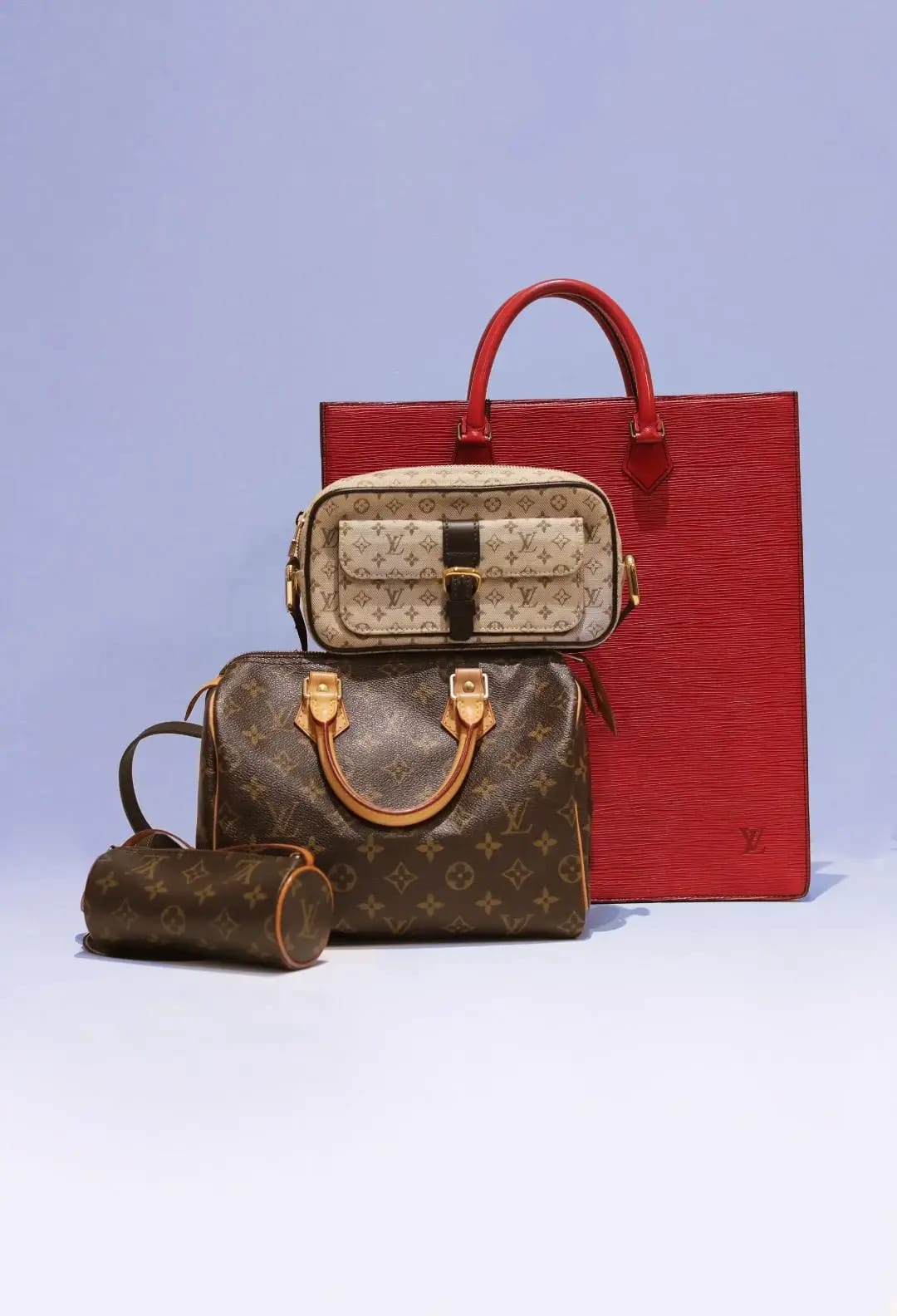
The canvas is the soul of a Louis Vuitton bag — it determines its look, its durability, the way it ages and its value. Monogram, Damier Ebène, Damier Azur, Empreinte leather, Épi leather or Vernis: each material has its own character and care. Understanding their differences means knowing how to choose the right bag and recognise quality. Here is the complete guide to Louis Vuitton canvases and leathers.
Why the canvas matters so much at Louis Vuitton
Louis Vuitton was born a trunk-maker in 1854: the house has mastered coated canvas for over a century. This heritage explains the central place of canvases in its identity — well before full-grain leather, it was the Monogram canvas that made the house world-famous.
For the buyer, the material influences three dimensions. Use: a coated canvas resists rain and rubbing; a smooth leather demands more care. Aesthetics: the pattern, the colour and the grain radically change the look of one and the same model. Value: for the same model, leathers (Épi, Empreinte) often resell above the canvas versions.
Here is a summary table before going into the detail of each material.
| Material | Appearance | Resistance | Point to watch |
|---|---|---|---|
| Monogram Canvas | Coated canvas, brown LV pattern | Very good (waterproof) | Vachette handles that patinate |
| Damier Ebène | Chocolate-brown / beige checkerboard | Very good | Discreet, no logos |
| Damier Azur | Beige / off-white checkerboard | Good | Soils faster (light areas) |
| Empreinte leather | Embossed Monogram leather, plain | Very good | Heavier, high-end |
| Épi leather | Embossed grained leather | Excellent | Edges sensitive to rubbing |
| Vernis leather | Glossy embossed patent leather | Moderate | Colour transfer, marks |
The Monogram Canvas: the absolute icon
Created in 1896 by Georges Vuitton as a tribute to his father Louis, the Monogram canvas is the most recognisable pattern in luxury: interlocking LV initials, flowers and stylised diamonds on a brown ground. It is a coated cotton canvas, therefore waterproof and very resistant.
Characteristics. Robust, easy to care for, it crosses the decades. Its distinctive feature: the handles, piping and tabs are in natural untreated vachette leather, which goes from light beige to honey then dark brown over time and with exposure — this is the famous "patina", appreciated by some, feared by others.
How to recognise it. A clean, regular pattern, always well-centred; on models with side seams, the design often mirrors symmetrically. The canvas has a slightly supple feel, never plasticky or cardboard-like.
For whom? Those who want the iconic par excellence and accept (or seek) the vachette patina. It is also the most liquid canvas at resale.
The Damier: Ebène and Azur
The Damier pattern actually predates the Monogram: created in 1888, it was relaunched in 1996. It is a checkerboard with no apparent logos (apart from a discreet "Louis Vuitton Paris" mention in one square).
Damier Ebène. The chocolate-brown and honey checkerboard, elegant and understated. Major asset: its handles are in treated brown leather, which does not darken like the natural vachette of the Monogram — ideal for anyone who fears the patina. Very resistant and discreet.
Damier Azur. The summer version, in beige and off-white with a light graphite checkerboard. Bright and fresh, it is by contrast more delicate: the light areas mark and soil more easily. Best reserved for careful use, rather spring-summer.
How to recognise them. A perfectly regular checkerboard, clean squares, impeccable alignment at the seams. The "Louis Vuitton Paris" square should be clean and well-positioned.
Empreinte leather: the Monogram in relief
Launched more recently, Empreinte leather is a full-grain vachette leather embossed with the Monogram pattern in relief, offered in plain colours (Black, Cream, Marine, Green, Bordeaux…). It is the house's most contemporary and most high-end material.
Characteristics. Supple, luxurious to the touch, Empreinte leather gives an understated and chic version of the iconic models (Speedy, Neverfull, Pochette Métis). The Monogram pattern appears only in relief, which makes it far more discreet than the canvas. Heavier than coated canvas.
How to recognise it. A real grained and supple leather, embossed with the Monogram, in a plain colour. The feel is that of a full-grain leather, not a canvas.
For whom? Those who want a discreet, premium Louis Vuitton, without the apparent pattern. It is also the version that resells best in proportion to its purchase price.
Épi leather: structure and colour
Introduced in 1985, Épi leather is an embossed grained vachette leather, whose texture evokes ears of wheat bent by the wind (hence its name). Dyed throughout, it comes in many bright or deep colours (Black, Red, Blue, Yellow, Green…).
Characteristics. It is one of the most resistant and durable leathers of the house. Structured, it holds the bag's shape perfectly. Its relief grain hides micro-scratches very well. It contains no apparent natural vachette, so no problem of uneven patina.
How to recognise it. A characteristic horizontal relief grain, a plain and deep tone, great rigidity. The LV logo is often discreet (engraved or absent).
For whom? Those who prefer a colourful, structured bag with no apparent logo. Its second-hand value is often higher than the canvas versions. One small point to watch: the edges can mark with repeated rubbing.
Vernis leather and the other materials
Beyond the great classics, Louis Vuitton offers several more specific materials.
Monogram Vernis. A glossy patent leather embossed with the Monogram, launched in 1998, glamorous and colourful. Beautiful but delicate: it is prone to colour transfer (a pair of jeans or another dark leather can stain it) and marks easily. To be handled with care.
Monogram Multicolore. The cult collaboration with Takashi Murakami (2003): the Monogram in multiple colours on a white or black ground. Discontinued, it is today sought after by collectors.
Mini Lin, Mahina, Monogram denim… The house has multiplied variations (Mini Lin canvas, perforated Mahina leather, Monogram denim…), rarer on the secondary market but interesting for anyone seeking originality.
Damier Graphite. The men's version in a black-and-grey checkerboard, highly prized for men's bags and accessories.
Caring for each canvas and leather
Care depends largely on the material. Here are the essential principles for preserving the value of a pre-owned Louis Vuitton.
Coated canvases (Monogram, Damier). The easiest to live with. Regular cleaning with a soft, slightly damp and soapy cloth is enough. Avoid excess water on the seams.
Natural vachette leather (Monogram handles). This is the most delicate part. It naturally darkens over time — to slow this patina, keep the bag away from direct sun, heat, prolonged humidity and cosmetics. A special leather protectant applied right from purchase can limit and even out the process. To go further, read our guide caring for a Louis Vuitton Monogram bag.
Leathers (Empreinte, Épi). Regular dusting with a soft cloth; a nourishing cream for smooth leather once or twice a year. Protect the Épi's edges from rubbing.
Vernis. The most fragile. Avoid any contact with other coloured leathers or textiles (transfer risk), clean delicately, and never store it pressed against a material that bleeds.
Common rule. Store each bag in its dustbag, lightly padded to maintain its shape, away from light and humidity.
Which canvas to choose for your use
In summary, here is our recommendation grid.
| Your priority | Recommended material |
|---|---|
| The iconic, liquidity | Monogram Canvas |
| Discretion, no patina | Damier Ebène |
| Summer freshness | Damier Azur |
| Discreet, plain premium | Empreinte leather |
| Colour and robustness | Épi leather |
| Glamour, glossy effect | Vernis leather (with care) |
At Old Fashioned Club, every Louis Vuitton bag is appraised and its material precisely identified before going on sale. Our advisers guide you towards the canvas best suited to your use. Our showroom at 4 rue des Saussaies, Paris 75008 lets you compare the materials in hand — nothing replaces touch to grasp the difference between a Monogram canvas and an Empreinte leather.
Discover our complete selection of pre-owned Louis Vuitton bags and the world of the house on our Louis Vuitton page. To place a piece in time, see our tutorial on the Louis Vuitton date code.
Frequently asked questions
- What is the difference between Monogram and Damier?
- The Monogram is the brown canvas with the LV pattern, flowers and diamonds (1896), with handles in natural vachette leather that patinates. The Damier is a checkerboard pattern with no apparent logos: Ebène (chocolate-brown, with treated leather handles that do not darken) or Azur (beige and white, summery but more delicate).
- Which Louis Vuitton canvas is the most resistant?
- Épi leather is one of the most resistant thanks to its relief grain and its structure. The Monogram and Damier coated canvases are also very robust and waterproof. Vernis leather is the most delicate (colour transfer, marks). Damier Azur, though solid, soils faster because of its light areas.
- Why are the handles of my Monogram darkening?
- Because they are made of natural untreated vachette leather, which patinates (darkens) over time, with light and contact. This is normal and even sought after by some enthusiasts. To slow the phenomenon, avoid direct sun and humidity. If you don't want a patina, choose Damier Ebène (treated leather handles) or an Épi/Empreinte leather.
- Is Empreinte leather worth more than Monogram canvas?
- For a comparable model and size, Empreinte leather generally sits above the Monogram canvas, new and pre-owned alike, because it is a more high-end full-grain material. It is also one of the versions that resell best in proportion to their purchase price.
- How do you care for Louis Vuitton Vernis leather?
- Vernis is the most delicate material: avoid any contact with other coloured leathers or textiles (risk of indelible colour transfer), clean it very gently with a soft cloth, and never store it pressed against a material that could bleed. Keep it away from heat, which can alter it.
Related articles
Pre-Owned Loro Piana: The Quiet Luxury Buyer's Guide
Cashmere, vicuña, Summer Walk loafers: icons, materials, authentication and resale value of pre-owned Loro Piana. The OFC guide to buying quiet luxury at a fair price.
Pre-Owned Givenchy: A Guide to the Antigona, Pandora & Parisian Chic
Antigona, Pandora, the legacy of Hubert de Givenchy: icons, leathers, authentication and resale value of pre-owned Givenchy. The OFC guide to buying at a fair price.
How to Estimate the Value of Your Pre-Owned Luxury Bag
How to estimate the value of your pre-owned luxury bag: house, model, condition, rarity, colour, accessories. The factors that set the price, explained by Old Fashioned Club.